The changing trends in drip edge and fascia: exploring roof trim evolution
Roof trim used to come in one color. Now the line where roof meets wall is a design decision — and it changes how the whole house reads.
Watch: drip edge and fascia in practice — open on YouTube
The short answer
Trim color does one of three jobs: it frames the roof, it thickens it, or it disappears into the siding. Pick the job first — the color follows from it.
Side by side
Three ways to finish an edge
Roof trim — commonly called drip edge or eave trim — is functional first, but it's also the outline of the house. For decades there was one option. These are the three approaches driving exterior design now.
| Approach | The move | Color story | Visual effect | Choose it when |
|---|---|---|---|---|
| Classic white | Contrast the trim against darker shingles. |
Trim / shingle
|
Frames the roof and siding like a picture frame. Neutral and timeless. | You want the architecture and siding color to lead. |
| Black | Match the trim to the shingle color. |
Trim = shingle
|
Increases the visual thickness of the roof. Reads more substantial and architectural. | A sloped roof needs the weight of a flat, modern one. |
| Siding-matched | Match drip edge, fascia and soffit to the siding. |
Trim = siding
|
The exterior becomes one integrated composition rather than separate parts. | You want the widest color range and a fully personalized exterior. |
Scroll the table sideways →
The classic white drip edge and fascia
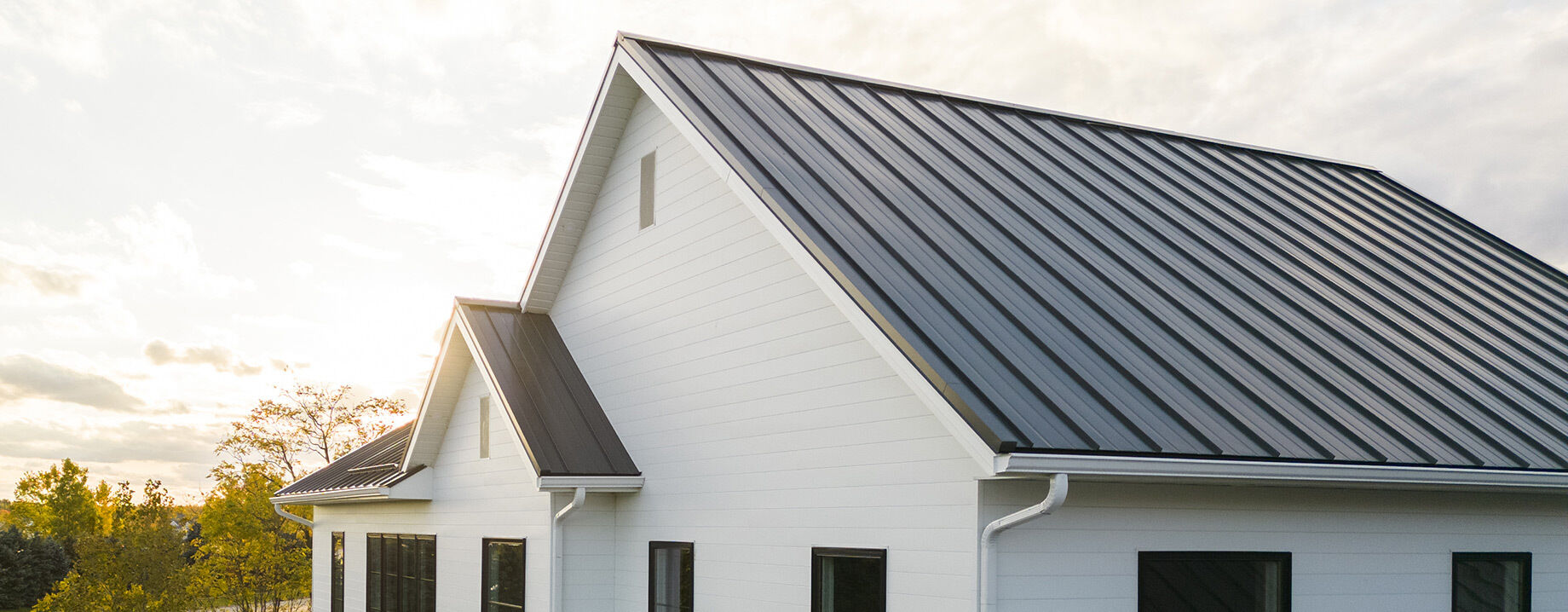
For decades, white drip edge and fascia have been the staple of residential roofing. White trim set against dark shingles gives a clean, timeless look, and it has stayed popular because it complements nearly every architectural style.
Think of it like a picture frame. White drip edge outlines the roof, the siding and the key architectural elements, drawing attention to the colors and style of the home while staying neutral itself.
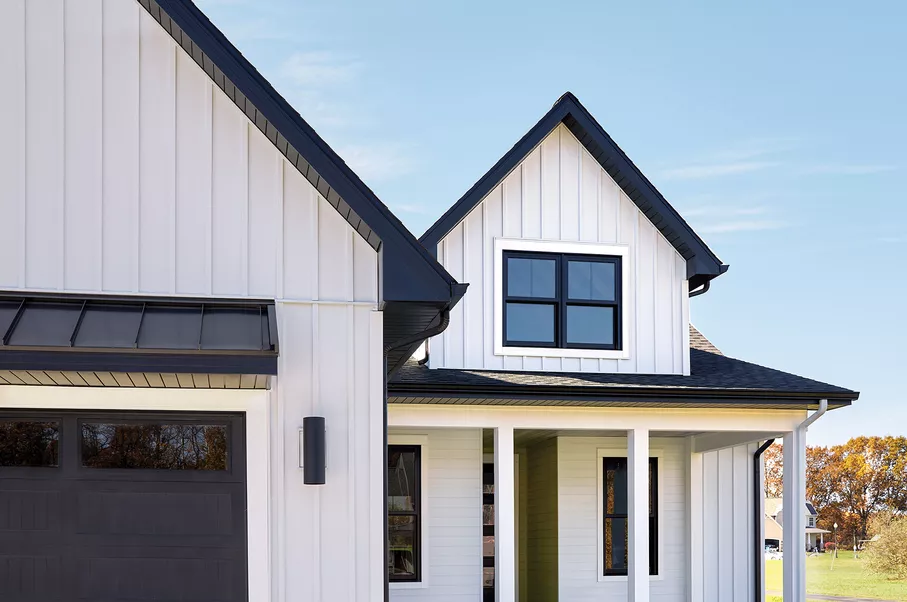
Black drip edge creates a thicker, architectural roof
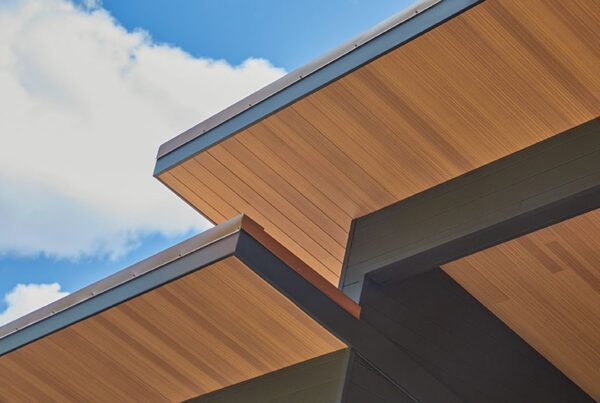
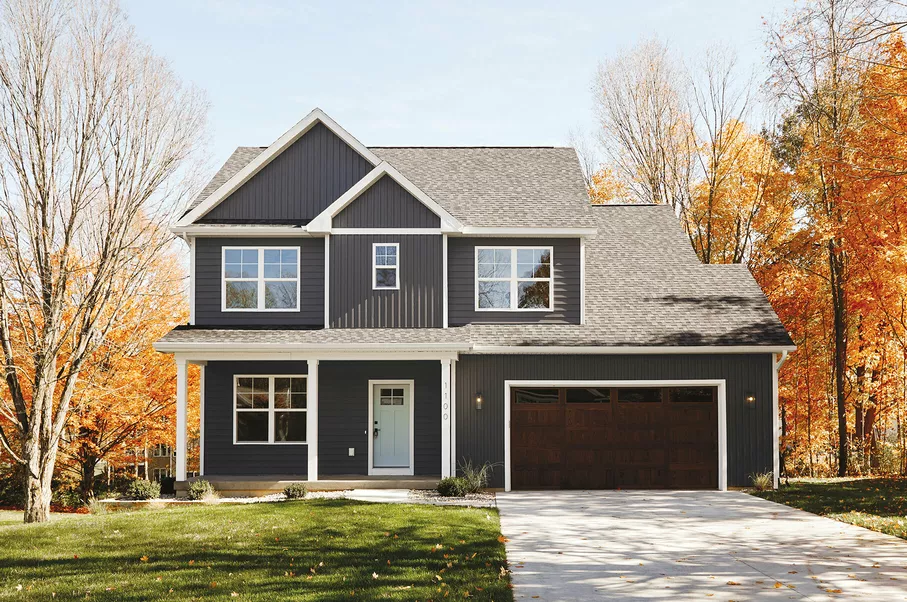
Black drip edge has gained significant popularity across the country in recent years. Matching the drip edge to the shingle color increases the visual thickness of the roof — the edge stops reading as trim and starts reading as roof.
In markets where flat, modern roofs are desired but not practical, homeowners combine dark shingles and dark trim to make a sloped roof look more substantial and architectural. The approach is especially effective on roofs with lighter-colored shingles, where the contrast between dark trim and light shingles creates a visually striking edge.
Siding-matched drip edge, fascia and soffit
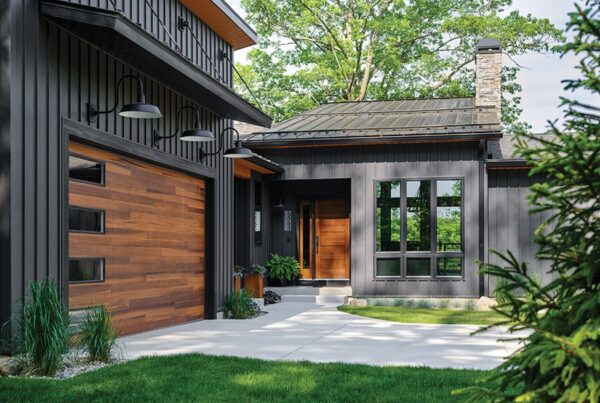
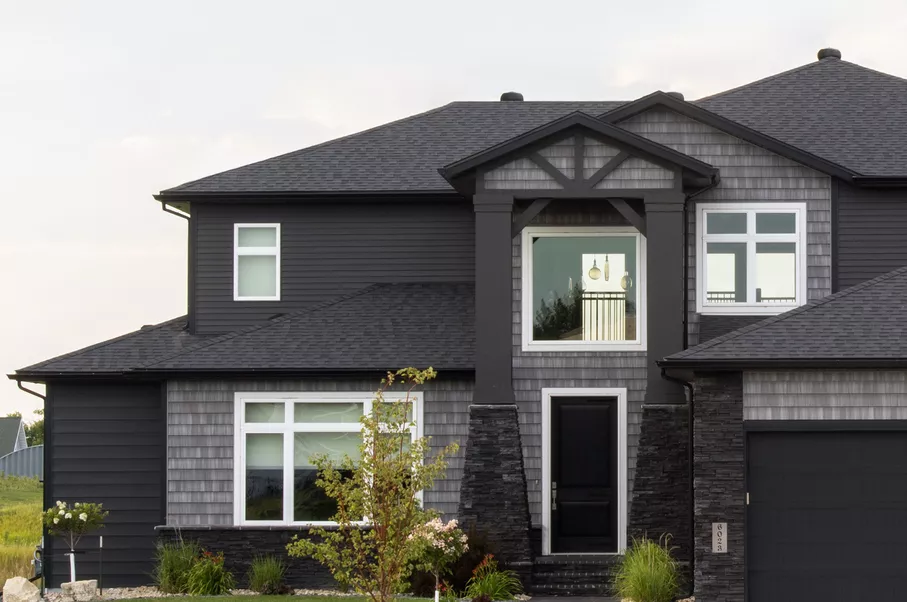
For a cohesive exterior, homeowners and builders are increasingly matching drip edge, fascia and soffit to the siding. When the trim colors harmonize with the siding, the entire exterior becomes one integrated composition instead of a set of separate parts.
It's harder to pull off than it sounds. Not all roof trim manufacturers offer matching colors across fascia, soffit and siding, so the palette you can actually build from depends entirely on who makes the parts. Where the matches exist, this approach opens up the widest range of color and the most room for personalization.
The products
Infinity Drip Edge and Pre-Notch Drip Edge
Quality Edge makes two drip edge options built for this shift — one that removes notching from the job entirely, and one that arrives already notched.
Infinity Drip Edge
No notching needed
Integrates cleanly with a range of roofing materials and colors, with an infinite overlap that finishes without notching.
- Cuts labor on the roof
- Meets local building code requirements
- Clean finish at any overlap
Pre-Notch Drip Edge
Pre-engineered, faster install
Arrives notched, so trim goes up faster and with fewer chances to get it wrong.
- Speeds up installation
- Reduces the risk of errors
- Consistent, professional finish
Both are available in colors that match Quality Edge Pre-Engineered Fascia and TruVent Hidden Vent Soffit — a full trim program with colors that match, contrast and work together, which is what makes the siding-matched approach above possible in the first place.
Explore drip edge options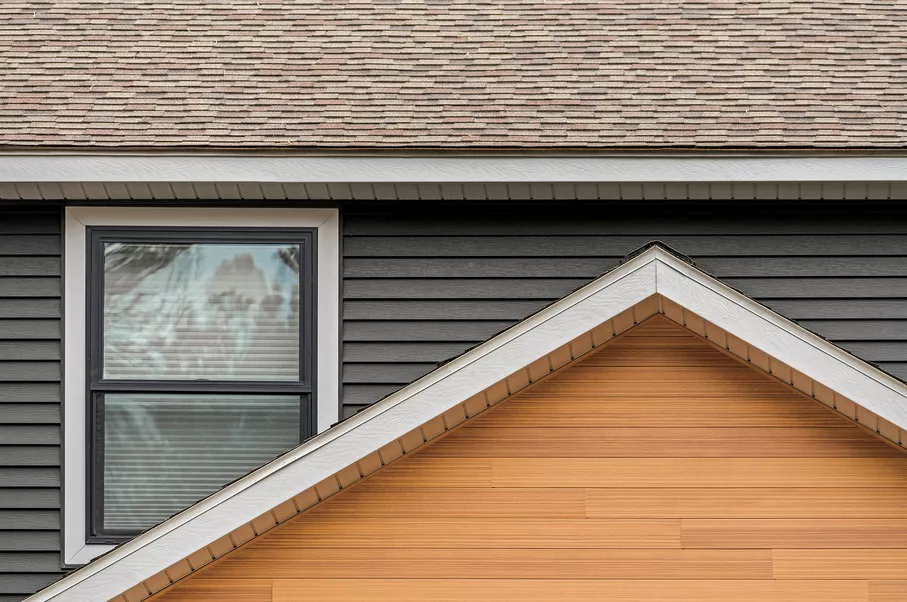
Why it matters
Trim is protection first, and design second
The move from white trim to black, and now to siding-matched systems, shows how much appetite there is for personalized exteriors. But the reason drip edge exists hasn't changed.
It sheds water
Drip edge directs runoff away from the fascia and into the gutter. That's the job it was invented for, and every color decision sits on top of it.
It outlines the house
Frame the roof, thicken it, or blend it away — the edge line is one of the few details visible from the street on every elevation.
It has to match
Color coordination across drip edge, fascia and soffit only works if one manufacturer makes all three in the same palette.
Whether the goal is a timeless look, the illusion of a thicker roof, or an exterior that reads as one piece, there are more colors and configurations available now than there have ever been. Quality drip edge and fascia improve how a building looks and protect it from water damage at the same time — which is the rare detail worth spending real thought on.